

SIDEBAR ________________________
Go ahead, I’ll wait….
The Information Revolution
Read on for more…
(By Alvin and Heidi Toffler)
The First Wave of change, launched by the Agricultural Revolution of 10,000 years ago, led to the transition from hunting, gathering, and foraging to the great peasant societies of the past. The Second Wave of change, triggered by the Industrial Revolution some 300 years ago, gave rise to a new factory-centered civilization. It is still spreading in some parts of the world as hundreds of millions of peasants, from Mexico to China, flood into the cities searching for minimal-skilled jobs on factory assembly lines. But even as the Second Wave plays itself out on the global stage, America and other countries are already feeling the impact of a gigantic Third Wave partly based on the substitution of mental power for muscle power in the economy.
The Third Wave Information Society is more than just technology and economics. It is not just “digital” and “networked.” Painful social, cultural, institutional, moral, and political dislocations accompany our transition from a brute force to a brain force economy. The Third Wave helps explain why so many industrial-era institutions, from giant corporations to governments, are dinosaurs gasping for their last breath. It is why America is suffering from simultaneous crises in everything from the education system, the health system, and the family system to the justice system, and the political system. They were designed to work in a mass industrial society. But America has left that behind.
Driven by global competition and other forces, America today is completing its transition from a Second Wave nation with a rusty smokestack, assembly-line economy to a sleek computer-driven, information and media dense economy and social system that, surprisingly, will have many features of the pre-industrial past. Swept along by the Third Wave of history, we are creating a new civilization.
.
During the first wave, most people consumed what they themselves produced. they were neither producers nor consumers… they were “prosumers””... It was the industrial revolution, driving a wedge into society, that separated these two functions, thereby giving birth to what we now call producers and consumers. This split led to the spread of the market or exchange network– that maze of channels thru which goods and services produced by me reach you and vice versa… (yet) … whether we look at self-help movements (or self-service stores & gas stations), do-it-yourself trends, or new production technologies, we find the same shift toward a much closer involvement of the consumer in production. In such a world, conventional distinctions between producer and consumer vanish. The “outsider’ becomes the insider…”
.
.
A Third Wave Primer:
http://www.thirdwave-websites.com/ind_primer.htm
We started off as hunter-gatherers. We were nomads. We chased our food and moved as the food moved, following water and seasons. The sick, old, and weak were left behind and died. Our tools were the blade and the club, mimicking the weapons of animals. The valued commodity was physical strength.
.
.
.

The First Wave:
The Agricultural Revolution
The first wave started as people realized that they could raise crops in the ground. People stayed in one place. The old, the sick, and the weak stayed with the family, and we developed treatments for them.
Families were extended; generations lived on the same land. Their sense of time was cyclical, seen as repeated cycles of moons, crops, and seasons.
Everybody worked on the farm. People were generalists, able to do many things. There was very little waste. Consider how a farm uses every bit of a butchered hog for food, clothing, candles, etc.
Any products that were produced were custom made, by hand, among the family. Work was done in the home or on the farm, from which we get the phrase cottage industry. Barter was the medium of exchange. The valued commodity was land, and so that’s what was taxed, usually as a share of the foodstuffs grown in the land.
Their tools were the inclined plane, the lever, and the wheel and axle. They used the blade as a plow. These tools magnified human strength.
The information available to people during the First Wave was limited to some verbal narratives and to what their senses apprehended (from which we get the Biblical euphemism, he had knowledge of her). Since information came from experience, people with more experience had more information, and we valued age.
.
The First Wave Transition
Transitions are generally painful things. Change does not go smoothly.
The farmers had conflicts with the remaining hunter-gatherers. Sometimes raiding parties would attack the food stores, and the farmers needed armies to protect themselves.
New types of conflicts arose among the farmers; who owned which land? Who got to use the available water? Who specified where the latrine was? We developed community laws and designated people to enforce them.
How did they pay for the laws, the protection, or the land? Generally, they taxed what was valuable, paying a large portion of their crops to a local strongman.
Three innovations set the stage for the Second Wave.
- Accurate clocks (usually each town could afford one, and placed it in a tall tower for visibility) permitted the coordination of activities to a degree not possible before.
- The printing press permitted large-scale, accurate duplication and transmission of information across space and time. Literacy became a new skill.
- The quest for farm implements led to new developments in metallurgy, notably iron and steel.
.
.

The Second Wave:
The Industrial Revolution
Our tools progressed, and we harnessed powerful forces of nature to amplify the power of our earlier tools. We applied to wind, water, coal, steam, and oil to the basic tools and produced railroads, clipper ships and steamships, and automobiles.
Second Wave work involved investments (capital) inexpensive equipment, people (labor) to work the machines, and a location (factories) where all the parts could come together.
These new focuses brought us, new groups. Only the Capitalists could afford the investments. A species called Managers appeared to keep the Labor working for the Capitalists. Labor, in turn, organized into Unions. The Corporation gave the business the legal status of a person.
The notion of the factory as the place of work extended beyond manufacturing: schools were factories for learning, hospitals were factories for treatment, asylums were factories for the sick.
As work moved from the home to the factory, people moved to cities. Often the husband went to work (in a second wave job) while the wife stayed home tending to first wave duties, and gaps appeared between the once-equal genders. The nuclear family became the normative unit.
The Second Wave Transition
Details of The Second Wave
Second wave workers were specialists to such a degree that barter was no longer practical. Cash money became the lifeblood of the economy. Banks started dealing with the working class. When money became more important than land, we started taxing money (both as income and profits).
Second Wave work was something quite separate from the house. The pinnacle of success was to have a career, a predictable, symbiotic relationship with one employer.
Here’s an interesting scenario: The husband spends his work life in a factory driven by second-wave, stop-watch timing. The wife spends her work life in a home driven by first-wave, cyclical time. When He takes Her out on a Saturday night, he paces, fumes, and looks at his watch because “women have no sense of time”. Ring any bells?
The factories consumed and processed raw materials, often exploiting natural resources in a non-sustainable manner. They found that bigger factories worked cheaper, and they competed on economies of scale. We later found out that economies of scale were restrained by the law of diminishing returns; the efficiency of the factory had limits.
The factories mass-produced standard products for mass markets. (You could have any color Ford you wanted, as long as it was black.) Middlemen and brokers provided the interface between the factories and the consumers.
Organizations progressed as the factories and corporations developed. The vertical org-charts represented the chain of command. The structure of General Motors wasn’t that different from the US Army.
Efficient use of the factories introduced time analysis. Frederick Taylor introduced the notion of linear, rather than cyclical, time.
The two World Wars drove the combatants to emphasize their manufacturing capabilities, driving the Second Wave to its peak. Production capacity won the wars as much as men with rifles did.
The information available to people increased. Printed materials conveyed information accurately across time and space. Libraries formed repositories of knowledge and thoughts. Information was stored in analog media, including books, photographs, and audio recordings.
Military needs set the stage for the Information Revolution.
- Ballistics computations drove the development of the first computer.
- Codebreakers needed de-ciphering systems, which developed into information processing systems.
- Radar sensor systems extended human sight beyond the visible horizon.
- The Cold War forced military investment in information-based command and control systems.
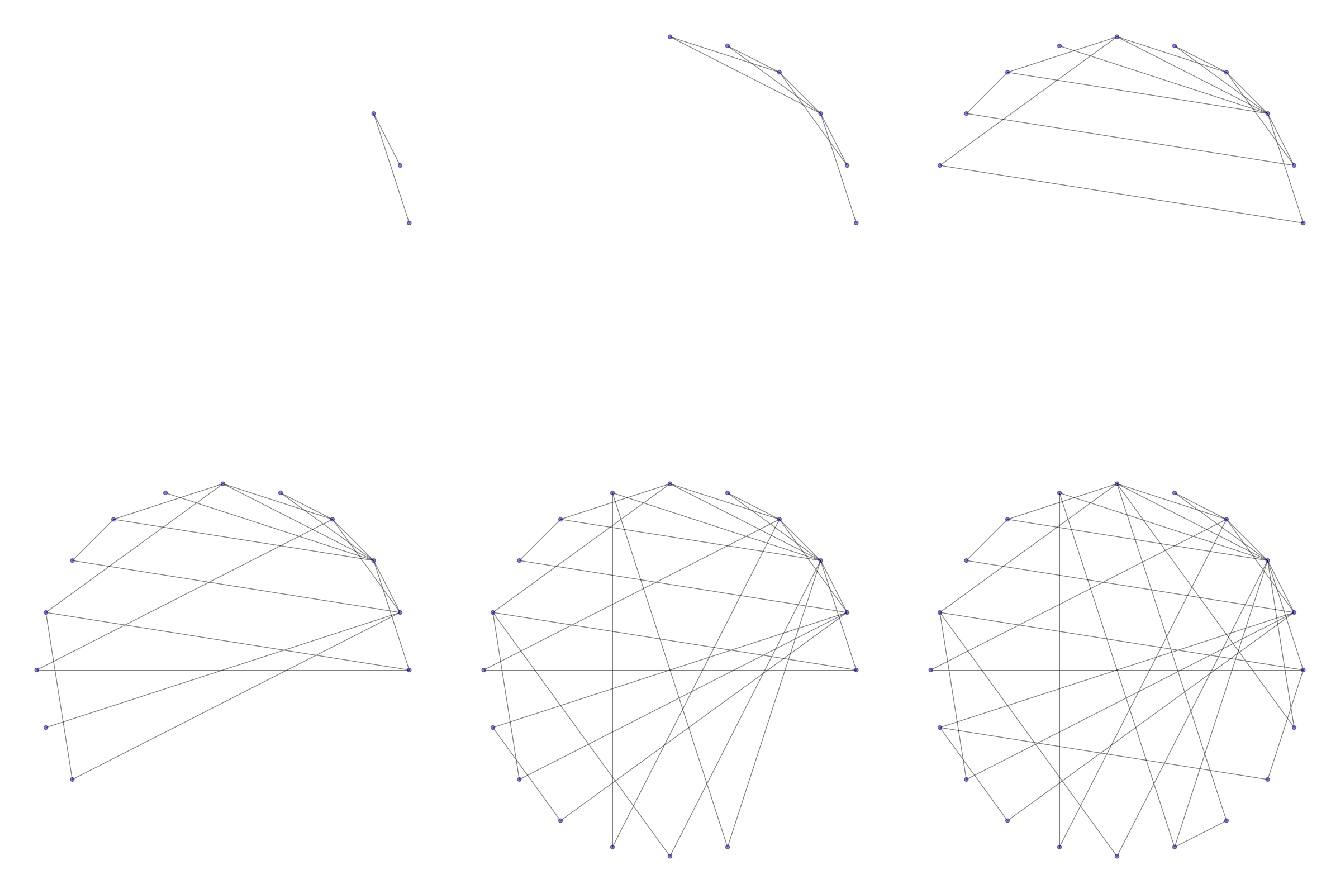
Network Theory in our General Market Analysis.
.
The Third Wave:
The Information Revolution
Just as manufacturing came out of the peak of the agricultural era, the information age came out of the peak of the manufacturing era. The huge companies and military organizations needed to track what they had, what they were doing, and what they were spending.
The new tools amplified our senses and memories, rather than our strengths. Radar systems warn us of incoming missiles, robot calipers detect tiny variations in ball bearings, and CD-Roms store our accumulated knowledge.
One early, widely developed info system was the telephone network. Several of our other technologies (fax systems, the internet) ride over the phone network. It’s not evident, but the phone network is the technological marvel of our age.
Work isn’t done in a factory anymore. Many of the factories (including the corporate headquarters, the administrative factory) have downsized, outsourced, and shut down.
Now that information is abundant, we no longer value older people as repositories of knowledge. In fact, we suffer from information overload. Too often, our systems deliver deafening noise without meaning.
The Third Wave Transition
The career, the social compact between the employer and employee, is a wistful nostalgia. Employees are responsible for their own careers now, which will involve many changes.
Too often, Dad’s job in the steel mill was gone. Mom got a job working in a phone center. The family unit has changed. It’s not the nuclear family anymore; the blended family has replaced Ward and June Cleaver. Gender distinctions in the workplace are waning.
Money isn’t important the same way as it used to be. It’s still the medium of exchange, and it’s still good to have a lot of it, but the tangible, physical presence of paper doesn’t translate to the Third Wave too well. The credit card is the new dollar bill.
Details of the Third Wave
- Work is done everywhere: at home, on the road, even in the office! (A return to the cottage)
- Continual education is the pre-requisite for success.
- Size doesn’t matter: Small, nimble, companies can compete with giant, bureaucratic, companies.
- Location, Space, and Mass don’t matter. (No pun intended)
- Time matters dearly, and we call the new timeframe Internet time.
- We haven’t figured out what to tax yet, but they’re thinking hard about it.
- Some people argue that Women may be more disposed to success in the third wave, dealing better with ambiguity, subtlety, collaboration, and context than Men do.
Digital Info and Processes
There are two types of information: digital and analog. Digital information, once in a computer, can be whisked anywhere in the world with one click. It can be rapidly moved without delay and without degradation. Digital information is faster and more fluid than analog information.
Business processes can gain or suffer from the distinction. Analog workflows built around a carbon-paper information system, a paper-driven scheduling system, and an analog voice-driven messaging system, have a hard time competing against a digital info system, web-based scheduling, and digital messaging systems.
Hyper-Organizations
The United States’ most successful export industry is the entertainment industry, shipping movies and music (which are, after all, only digital files) around the world. How does Hollywood organize around work?
Each film or video is a unique project, developed by a distinct organization, linking people with an incredible range of skills, and the whole shop disbands when the project is over. This is called a hyper-organization, suggesting rapid, churning linkages, as opposed to the GM hierarchical org-chart.
Mass Customization
Your super market’s frequent shopper card and your credit card’s frequent flyer miles program provide manufacturers with detailed customer information, in an arrangement called one-to-one marketing. You’ll get coupons that vary from your neighbor’s. Instead of mass-marketing, third wave products are mass customized for individual tastes. (Think Land’s End).
The implication is that the information gained in a transaction may be more valuable than the profit from the deal.
The One-to-One Future
Customers now interact directly with manufacturers. First, it was 800 numbers, then it was websites. You call their phone center (located adjacent to a FedEx hub), and your sweater with your initials is delivered by 2:00 the next day. That sweater wasn’t lying around, ready to be delivered; increasingly, the product isn’t finished until just before it goes into the package.
All of a sudden it didn’t matter where the phone center was. It could be in Utah or the Sun Belt. And then we realized it doesn’t matter where the Company was, and maybe every section of the company should exist where it’s most efficient. Like Mexico, or India. Here’s a Third Wave mantra: Place doesn’t matter anymore.
Disintermediation
The losers in this new world were the middlemen, the intermediaries. The buzzword is disintermediation, the elimination of all steps between the producer and the consumer. Car Salesmen, Brokers, Insurance salesmen: they’re all going under the ax. Toyota’s busiest dealership in the US is a website.
Computers summarize the reports and data that used to be the realm of the middle manager, who were intermediaries between the shop floor and the annual report. The gutting of middle management severed the career ladder.
Network Economies
The Second Wave featured economies of scale, limited by decreasing returns. The Third Wave economy is different.
- If you bought the very first fax machine, it probably cost $18,000, and you couldn’t use it because nobody else had one.
- Ten years ago, you’d pay $500 for faxing, and your purchase would connect you to hundreds of thousands of fax machines.
- This week, you can buy one for $80, and that amount will buy you a connection to millions of fax machines.
This is the paradox called the network economy: as the size of the network grows, the price of the device falls to near-zero, but the value of the device climbs astronomically because of its connections.
This is a huge notion. For instance, we give cell phones away if you’ll agree to a $20 monthly fee, and you can use that cellphone to call people around the globe. We used to pay for internet access, but now people are giving us web access for free if we’ll watch their ads.
Digital Convergence
In the second wave, the phone company handled your voice needs, and the electric company handled your energy needs. Since information became digital, your cable-TV company can sell you phone service, and the electric company can sell you internet access. The old distinctions are blurring, and it’s a very confusing time. We call this Digital Convergence. Increasingly, companies are all in the same business: meeting customer needs through information.
Business Implications of The Third Wave
- Time moves faster
- Compete on information
- Seek digital processes
- Place and Distance don’t matter
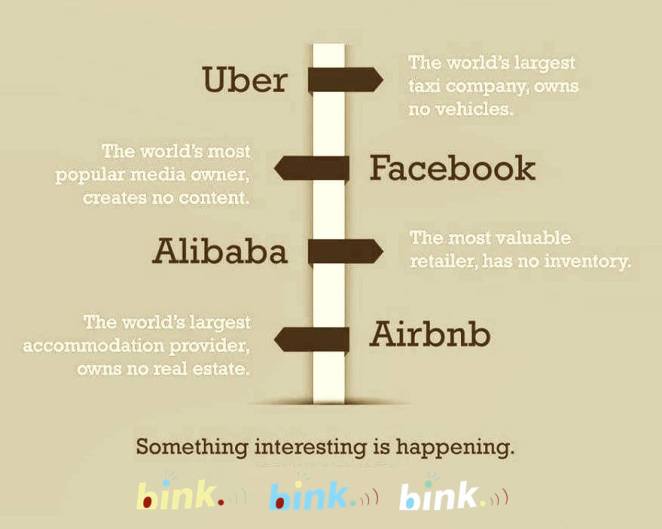
- Avoid inventory, bricks, and mortar
- Build information and relationships
- Use the web for two-way communications
- The information gained in a transaction may be more profitable than the transaction
.

Toffler:
“A powerful tide is surging across much of the world today, creating a new, often bizarre, environment in which to work, play, marry, raise children, or retire. In this bewildering context, businessmen swim against highly erratic economic currents; politicians see their ratings bob wildly up and down; universities, hospitals, and other institutions battle desperately against inflation. Value systems splinter and crash, while the lifeboats of family, church, and state are hurled madly about.
…many of today’s changes are not independent of one another. Nor are they random. For example, the crack-up of the nuclear family, the global energy crisis, the spread of cults and cable television, the rise of flextime and new fringe-benefit packages, the emergence of separatist movements from Quebec to Corsica, may all seem like isolated events. Yet precisely the reverse is true. These and many other seemingly unrelated events or trends are interconnected. They are, I fact, parts of a much larger phenomenon: the death of industrialism and the rise of a new civilization.
Lacking a systematic framework for understanding the clash of forces in today’s world, we are like a ship’s crew, trapped in a storm and trying to navigate between dangerous reefs without compass or chart. In a culture of warring specialisms, drowned in fragmented data and fine-toothed analysis, synthesis is not merely useful—it is crucial.
For this reason, The Third Wave is a book of large-scale synthesis. It describes the old civilization in which many of us grew up and presents a careful, comprehensive picture of the new civilization bursting into being in our midst.
So profoundly revolutionary is this new civilization that it challenges all our old assumptions. Old ways of thinking, old formulas, dogmas, and ideologies, no matter how cherished or how useful in the past, no longer fit the facts. The world that is fast emerging from the clash of new values and technologies, new geopolitical relationships, new lifestyles and modes of communication, demands wholly new ideas and analogies, classifications and concepts. We cannot cram the embryonic world of tomorrow into yesterday’s conventional cubbyholes. Nor are the orthodox attitudes or moods appropriate.”
Toffler’s assumption: the “revolutionary premise” –
Change is not chaotic or random but forms a sharp, clearly discernible pattern
changes are cumulative – adding up to a giant transformation
change comes in waves – history is a succession of “rolling waves of change”
If we identify key change patterns as they emerge, we can influence them
We are the final generation of an old civilization and the first generation of a new one; much of our personal confusion, anguish, disorientation can be traced directly to the conflict within us, and within our political institutions, between the dying Second Wave civilization and the emerging Third Wave… (p. 12)
The first wave was the rise of agriculture, beginning arbitrarily around 8000 B.C.. Before this time, from the beginning of civilization, humans were hunter-gatherers, living in small, often migratory groups, feeding themselves by foraging, hunting, fishing, herding. Pre-first wave populations could be called “primitive,” while the second wave could be called civilized.
The first wave then was a process of civilization. The land was the basis of the economy, life, culture, family structure, politics. Life was organized around a village. A simple division of labor prevailed; a few clearly defined castes and classes arose. Power was rigidly authoritarian. Birth determined one’s position in life. The economy in each town was decentralized, so each community produced most of its own necessities.
The agricultural revolution, the first wave, was almost exhausted by the end of the seventeenth century, when the industrial revolution began in Europe, specifically England around 1650 to 1750. “Industrialization was more than smokestacks and assembly lines. It was a rich, many-sided social system that touched every aspect of human life; it put the tractor on the farm, the typewriter in the office, the refrigerator in the kitchen…It universalized the wristwatch and the ballot box.
It is interesting to note the clash of civilizations between second and third wave In the settlement of the United States. The first settlers established an agricultural civilization. But hard on the heels of the farmers came the earliest industrializers, pushing the farms further west.
Economic and social tensions between First Wave and Second Wave forces grew in intensity until 1861, when they broke into armed violence. The Civil War “was not fought exclusively…over the moral issue of slavery or such narrow economic issues as tariffs. It was fought over a much larger question: would the rich new continent be ruled by farmers or industrializers….?
Today the First Wave has virtually subsided, except in some first-world countries and tribal populations in Africa and South America.
The Second Wave continues to spread in second-world countries, as they build mills, plants, factories, railroads. The force of the Second Wave is not yet spent.
“The nuclear family, the factory-style school, and the giant corporation became the defining social institutions of Second Wave societies.”
“In one Second Wave country after another, social inventors, believing the factory to be the most advanced and efficient agency for production, tried to embody its principles in other organizations as well. Schools, hospitals, prisons, government bureaucracies, and other organizations thus took on many of the characteristics of the factory—its division of labor, its hierarchical structure, and its metallic impersonality.”

Effects/Facets Across Waves:
Energy
First wave – “living batteries” – human and animal muscle power/ second wave – irreplaceable fossil fuels/ third wave – Biotech, renewable, solar; hydrogen fuel cell
Technology
first wave – “necessary inventions” – winches, wedges, catapults, levers, hoists/ second wave – electromechanical machines, moving parts, belts, hoses, bearings, bolts – machine tools for mass production/the third wave – the computer
Distribution/Production/Transportation
First wave – handcraft methods of production, custom products, small markets, slow distribution/transportation/ Second wave – rail/highways, complex mass distribution networks, mass production/ Third-wave – specialized; computerized supply chain mgt.
Families
First wave – large, multigenerational families, immobile (rooted to the soil)/ Family as an economic unit of production/ second wave – nuclear family, smaller, more mobile, more fragmented/ Third-wave – expanded, blended, amalgamated
Education
First wave – homeschooling, small schools, less education needed/sought/ Second wave – mass education; overt curriculum – 3 R’s; covert curriculum—obedience, rote, repetition; regimentation (factory work required these); children started school younger, stayed longer/ Third wave – individualized, distributed (online learning)
Business
First wave – individuals “sole proprietors” – no real business form/ Second wave – huge corporations, “immortal beings” / Third wave- networks, relationships & alliances
Communication
First wave – face to face, person to person – means of sending messages across time/space limited, reserved for rich and powerful, under social control, weapons of the elite/Second wave – massive amounts of information now needed – postal services “the right arm of our modern civilization” / internal communications within companies also spiraled //Telephone and telegraph …Mass society required mass communications (one sender, many receivers/technology) – newspapers, magazines, television, radio, — “all of them stamp identical messages into millions of brains” / “facts” (mass-manufactured)/ Third Wave- digital, interactive, instantaneous, global, networked
The Invisible Wedge:
The Second Wave…violently split apart two aspects of our lives that had always, until then, been one, driving a giant invisible wedge into our economy, our psyches, and even our sexual selves.
The Industrial Revolution, although it created a new social system, also ripped apart the underlying unity of society, creating …economic tension, social conflict, and psychological malaise.
The two halves of human life that the Second Wave split apart were production and consumption. Until the IR, the vast bulk of all foods, goods, services, were consumed by the producers themselves, their families, or a tiny elite….
In most agricultural societies the great majority of people were peasants in small, semi-isolated communities….who …lacked the incentive to increase production (beyond their own immediate needs). The small amount of commerce that existed represented only a trace element in history, compared with the extent of production for immediate self-use.
In First Wave economy, Sector A (production for own use) of society was huge; Sector B (production for trade) was tiny. So, for most people, production and consumption were fused into a single life-giving function.
The Second Wave violently changed this situation. Instead of essentially self-sufficient people and communities, it created a situation in which the overwhelming bulk of all food, goods, and services was destined for sale, barter, or exchange. It virtually wiped out of existence goods produced for one’s own consumption; everyone became almost totally dependent upon food, goods, or services produced by somebody else.
In short, industrialism broke the union of production and consumption and split the producer from the consumer.
Consequences:
“The marketplace” became the center of life; the economy became “marketized”.
In politics, Second Wave governments were torn by conflict between the demands of producers (workers and managers) for higher wages, profits, benefits; and the demands of consumers (including these very same people) for lower prices.
What are the implications of this conflict today?
Culture too was shaped by this cleavage, producing the most money-minded, grasping commercialized, and calculating civilization in history. Personal relationships, family bonds, love, friendship, neighborly and community ties all became tinctured or corrupted by commercial self-interest.
This concern with money, goods, and things are not a reflection of capitalism (as Marx claimed) but of industrialism. It is a reflection of the central role of the marketplace in all societies in which production is divorced from consumption, in which everyone is dependent upon the marketplace rather than on his or her own productive skills for the necessities of life.
Toffler asserts that “corruption is inherent in the divorce of production from consumption.”
This divorce of production from consumption even affected our psyches and our assumptions about personality. Behavior came to be seen as a set of transactions. Instead of a society based on friendship, kinship, or tribal or feudal allegiance, there arose …a civilization based on contractual ties (consider prenups!)
The dual personality of producer/consumer (prosumer)…
The person who, as a producer, was taught to defer gratification, be disciplined, controlled, restrained, obedient, a team player…was simultaneously taught, as a consumer, to seek instant gratification, to be hedonistic, to abandon discipline, to pursue individualistic pleasure.
Sexual split — between men as “objective” in orientation, and women as “subjective.”
In First Wave societies. Most works were performed in fields or at home, with the entire household working together and with most production destined for consumption within the village or manor. Work-life and home life were fused, intermingled; division of labor was very primitive, with low levels of interdependency.
The Second Wave shifted work to a factory, introducing a much higher level of interdependence—collective effort, the division of labor, coordination, integration of many different skills. Success depended upon the carefully scheduled cooperative behavior of thousands of far-flung people, many of whom never laid eyes on one another. This also brought severe conflict over roles, responsibilities, rewards.
More and more production was transferred to the factory and office; the countryside was stripped of the population.
But in the home, there was still interdependence. Each home remained a decentralized unit engaged in biological reproduction, child-rearing, cultural transmission. The housewife continued to “produce” but only for Sector A (her own family). As the husband marched off to do the direct economic work, the wife generally stayed behind to do the indirect economic work. He moved, as it were, into the future; she remained in the past.
This division produced a split in personality and inner life. The public nature of factory/office brought with it an emphasis on objective analysis and objective relationships. Men were encouraged to become “objective”. Women performed in social isolation and were taught to be “subjective” (incapable of rational, analytic thought that supposedly went with objectivity). Women leaving home to work were accused of being “defeminized” tough, cold – (objective!)
Sexual differences and sex role stereotypes were sharpened by the misleading identification of men with production and women with consumption, even though men also consumed and women produced.
Once the invisible wedge between production and consumption was hammered into place, separating producer from consumer, profound changes followed:
The market needed to connect the two; New political, social conflicts–New sexual roles
The split also meant that all Second Wave societies would have to operate in a similar fashion, meeting certain basic requirements.
.
The code:
1. Standardization – millions of identical products; weights and measures; prices; money, language, technology….. what else?
2. Specialization – elimination of diversity in language, leisure, lifestyle; diversity of work – only one task per person “professional”
3. Synchronization – the careful organization of work; coordination of efforts; beat of the machine, not of nature; punctuality; hours/days/weeks set aside for specific activities; school year
4. Concentration – total dependent on highly concentrated deposits of fossil fuel; population; work (in specific locations, rather than everywhere); the poor, criminals, the insane; concentration of flow of capital (to large corporations, banks); concentration of production among only a few large producers (autos, breakfast foods)
5. Maximization – bigger is better; a smaller number of larger units; growth at all costs (GNP, etc.)
6. Centralization – of political power (U.S. states consolidated); of industry (companies, industries, the economy as a whole)
.
I have distilled most of the components and tenets of Toffler’s Weltanshaung into a matrix which delineates each basic element of society and its essential character in each of its “evolutionary” stages. As the matrix and Toffler suggest “these critical junctures should not be envisioned so much as three critical events which occurred in three particular moments in history, but rather as successive waves of change, colliding and overlapping– and which impact every aspect of our lives.”

_____________________________________
BinkNyc transforms a company into a culture,
grows businesses into movements,
improving peoples lives.
The results you get are right here > 


















 BinkNyc — Strategic Publicity
